Where Horror Gets Studied, Skewered, and Celebrated.
Newest articles and reviews
(SXSW) Irish Folklore and Haunted Grief: Damian McCarthy's HOKUM Returns to Terrify SXSW
By. Professor Horror
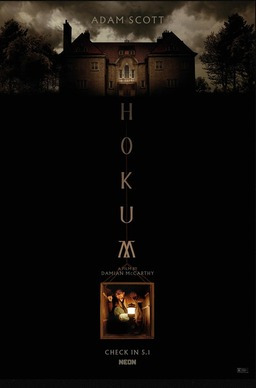
Two years ago, I attended the premiere of Oddity at SXSW, and it remains one of my favorite festival experiences. The packed audience reacted like a single organism: gasping, jumping, laughing nervously, and occasionally screaming loud enough to startle the people doing the screaming. It was one of those rare horror screenings where the room itself becomes part of the movie. In 2026, Irish filmmaker Damian McCarthy returns to the festival with HOKUM, and it quickly becomes clear that he has managed to scare an SXSW audience all over again. McCarthy has developed a distinctive style that blends isolated locations, cursed objects, and folklore-laced storytelling into tightly wound horror narratives that feel both ancient and freshly sinister. His films are never just about ghosts or monsters; they are about how stories themselves haunt us. In HOKUM, those stories seep out of Ireland’s landscape, its traditions, and its lingering sense that the past is never entirely finished with the present.
Ohm Bauman (played with deliciously weary cynicism by Adam Scott) is a successful author known for writing brutally bleak stories that revel in the worst impulses of human behavior. His fictional worlds are filled with characters who exist in extreme isolation, cut off from empathy and meaningful connection, and Ohm’s real life isn’t much brighter. He lives alone, surrounded primarily by his own manuscripts and a lingering sense that the darkness he writes about may be following him home. Even when Ohm is technically alone in a room, the film constantly suggests that something unseen is hovering just behind him. The emotional gravity of Ohm’s life stems from the death of his parents, whose cremated remains sit in matching urns that repeatedly appear in the film through careful eyeline matches and lingering close-ups. His mother died decades earlier in a tragic incident, and that loss set off a chain reaction that eventually led to his father’s death as well. Unsure what to do with their ashes, Ohm decides (during the completion of his famous trilogy) to bring them back to Ireland, the homeland they once left behind. His plan is simple in theory: scatter their ashes at the hotel where they spent their honeymoon and finally put the past to rest.
Ireland, however, rarely cooperates with plans that simple. Upon arrival, Ohm encounters a wonderfully eccentric collection of locals who feel as though they have wandered out of half-remembered folk tales. The elderly hotel owner (Brendan Conroy) delights in terrifying small children with elaborate stories about malicious folkloric entities that roam the countryside looking for mischief…or worse. A strange forest dweller named Jerry (David Wilmot) introduces Ohm to the cultural joys of Poitín (Ireland’s notorious moonshine) and an unforgettable mixture involving goat’s milk and mushroom powder that may or may not open the door to supernatural perception. Even the sharp-tongued bartender Fiona (Florence Ordesh) carries the air of someone who belongs to the town’s storytelling tradition. Through these characters, McCarthy carefully establishes the narrative’s mythic framework: stories are not merely entertainment here, but warnings, maps, and sometimes traps. Ohm, however, remains stubbornly skeptical. He wants access to the honeymoon suite he believes his parents stayed in, but the room is sealed behind a heavy metal gate and protected by a carefully guarded key due to rumors that a witch haunts the space. The bellhop (yes, a bellhop with the little outfit and everything) (Will O’Connell) and bartender happily spin creepy tales about the room’s history, but Ohm dismisses the entire legend as, well, hokum.
Of course, one of McCarthy’s greatest strengths as a filmmaker is his ability to weaponize storytelling itself. In HOKUM, folklore operates almost like a slow-burn spell, gradually reshaping the viewer’s understanding of what is happening. McCarthy understands that traditional folklore rarely tries to convince skeptics outright, but instead, it surrounds them with signs, symbols, and inexplicable events until disbelief becomes impossible to maintain. This narrative strategy mirrors the logic of folk horror traditions, where communities preserve knowledge through stories that outsiders often dismiss until it is far too late. Ohm may refuse to emotionally connect with the townspeople around him, but the strange events surrounding the hotel begin to intrigue him in ways that his rational explanations cannot easily dismiss. After a tragedy involving Fiona, his relationship with the community shifts subtly, and the stories he once mocked start to feel less like quaint superstition and more like survival guides. McCarthy doesn’t rush this transformation. Instead, he lets it unfold gradually, allowing the audience to experience the same creeping doubt that begins to unsettle Ohm.
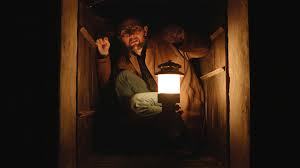
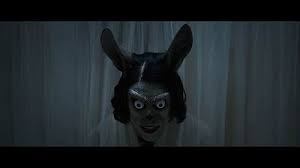
Atmosphere has always been McCarthy's secret weapon, and HOKUM demonstrates why his films continue to terrify festival audiences. Like his earlier films Caveat and Oddity, the movie relies heavily on darkness, ringing bells, ominous silences, and the feeling that unseen forces are watching from the edges of the frame. McCarthy's horror often works because he understands that fear thrives in ambiguity, and he gives viewers just enough information to spark their imagination but rarely enough to fully explain what they are witnessing. Staring into long dark hallways and waiting for a dumbwaiter has never felt so nerve-wracking. The SXSW audience reacted to these moments exactly the way horror fans hope they will: jumping, shouting, and occasionally laughing in that nervous way people do when their brains need a quick emotional reset. If haunted objects are a recurring feature of McCarthy's storytelling, so too are rabbits, which seem to occupy a particularly cursed corner of his cinematic imagination. The film's pacing is also aided by the editing of Brian Philip Davis, whose work was widely praised in discussions of Oddity. Davis has a knack for letting tension stretch just long enough that the audience begins scanning the frame for danger, only to puncture that tension with perfectly timed visual shocks or unsettling reveals.
Beneath the supernatural spectacle lies a deeper thematic thread: the complicated and sometimes haunting relationship between parents and children. Without giving away too much of the film’s plot, HOKUM repeatedly returns to the idea that the bond between parent and child can transcend death, guilt, and even moral failure. Ohm’s memories of his mother linger throughout the narrative in ways that suggest unfinished emotional business rather than simple grief. Fiona’s storyline introduces another dimension of parenthood, and one that highlights the vulnerability and resilience involved in protecting future generations. Meanwhile, other characters embody the darker side of parenthood, illustrating how selfishness and cruelty can corrupt that sacred responsibility. McCarthy weaves these narratives together carefully, which allows viewers to gradually recognize that the supernatural events unfolding around the hotel may be tied as much to human relationships as to ancient curses.
Ultimately, HOKUM succeeds because it understands something fundamental about horror storytelling: the scariest stories are rarely about monsters alone. They are about the things we carry with us: family history, regret, belief, and the nagging suspicion that the past may still be watching. Damian McCarthy once again proves himself to be one of the most interesting voices working in contemporary horror, a filmmaker who knows how to blend folklore, atmosphere, and character psychology into deeply unsettling experiences. Two years ago, a packed SXSW crowd became one organism in the dark, undone by a story they hadn't expected to get under their skin. It happened again this year.
When HOKUM arrives in theaters on May 1, you'll have the chance to find out whether McCarthy's spell works on you too.
About Professor Horror
At Professor Horror, we don't just watch horror: we live it, study it, and celebrate it. Run by writers, critics, and scholars who've made horror both a passion and a career, our mission is to explore the genre in all its bloody brillance. From big-budget slashers to underground gems, foreign nightmares to literary terrors, we dig into what makes horror tick (and why it sticks with us). We believe horror is more than just entertainment; it's a mirror, a confession, and a survival story. And we care deeply about the people who make it, love it, and keep it alive.